Brick Exterior Basics
The brick exterior of your home sets the tone for everything contained within. Whether it’s brick, stucco, shingles, or plaster [yes, that’s a thing!], you want your first impression to be a solid one. Choosing your exterior style may initially seem simple, but things change when the time comes to address those nitty gritty details. We figured we’d do all of the research for you, sharing industry tips and tricks divided up by style. And today, we’re diving into brick – not literally, thank goodness!
From traditional to contemporary, a brick facade remains straight up classic. So, whether you’re building, massively remodeling, or making a minor update, crank up the mood music here, and then get scrolling for all the brick house deets!
BRICK TYPE
Hand Molded: Full disclosure, we aren’t brick experts [don’t act too surprised]. Thus, we jumped on the phone with one of our favorites, South Texas Brick and Stone, to get the low down on everything brick. First of all, we love hearing that there has been a huge shift towards hand-molded, antique-inspired brick because that’s one of our very favorite looks to spec! Generally in the form of clay, hand-molded bricks are known for their weathered appearance and soft, less uniform edges. Needless to say, all of those perfectly imperfect details create a texture we can’t get enough of!

Extruded: If you’re going for a more contemporary vibe, you may opt for extruded brick. It looks clean and sharp, each one cut to the exact same size. Similar to hand-molded, these are born out of clay but are also available in concrete.
BRICK SHAPE
Bricks are available in all shapes and sizes but we’ve found Queen, Modular and Mid-Century to be the most common.
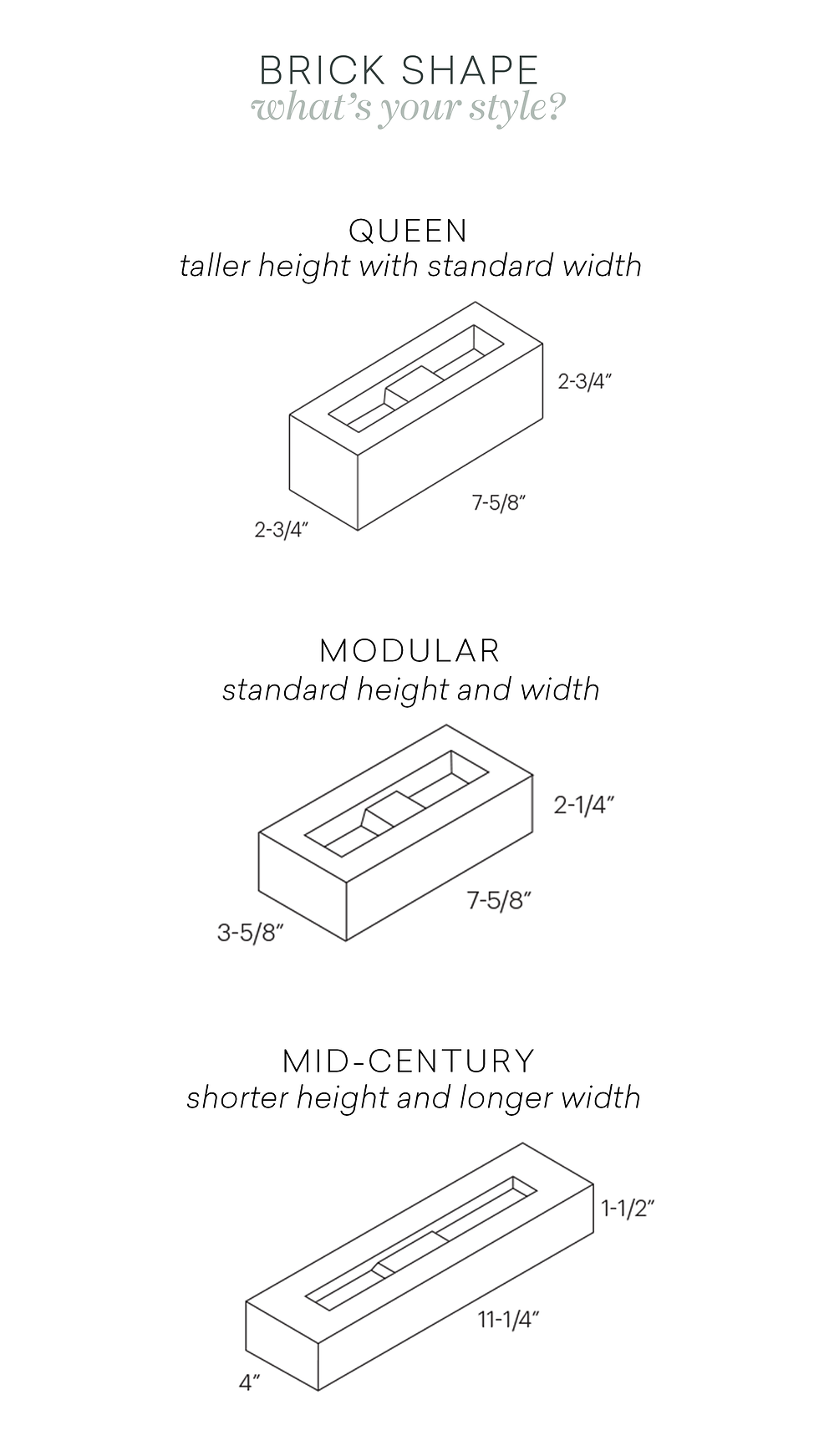
Queen: Queen bricks have become a very popular selection in Colonial and Acadian style homes. They present with a standard width, but are slightly taller than traditional brick, lending a larger, more substantial surface area.
Modular: This is what you think of when you think of a traditional brick facade! It’s the same width as a queen brick but slightly shorter.

Mid-Century: This brick lives on fabulous ranch style homes designed throughout the 50s-70s, and it’s making a serious comeback! Elongated and thin, mid-century bricks make quite a statement when applied to a modern structure – an application we personally love on our client’s contemporary Tudor-style home below!

Expert Tip: Renovating or adding on? Find a stellar local brick supplier and their team can [usually] match your home’s existing brick! South Texas Brick and Stone and others like them have thousands of options to provide you with a seamless transition.
BRICK FINISHES
More decisions to make! Once you’ve settled on your brick style/size, it’s time to think about color. Whether you prefer a red, a charcoal, or even a golden hue, there are many beautiful options. As a result, you have bricks that can be installed as-is or enhanced with a decorative wash. What is a decorative wash, you ask? Keep scrolling!
Limewash: A mix of lime and water that penetrates the brick. A limewash is a nice, soft option for adding texture to your home while creating protection against the elements. This finish allows the character of your brick to shine through, with application before or after installation.
Slurry or Smear: Another common way to whitewash a brick is to use a mortar instead of a lime based solution. The mortar is troweled onto and then subsequently wiped off of the surface of the brick and can be applied in varying thicknesses. Depending on how heavy-handed the application is, the bricks will either be concealed or revealed to achieve the desired look.
This technique usually happens during the brick’s original installation by spreading the mortar between bricks while being laid. Additionally, you can apply it later for a handsome exterior refresh!
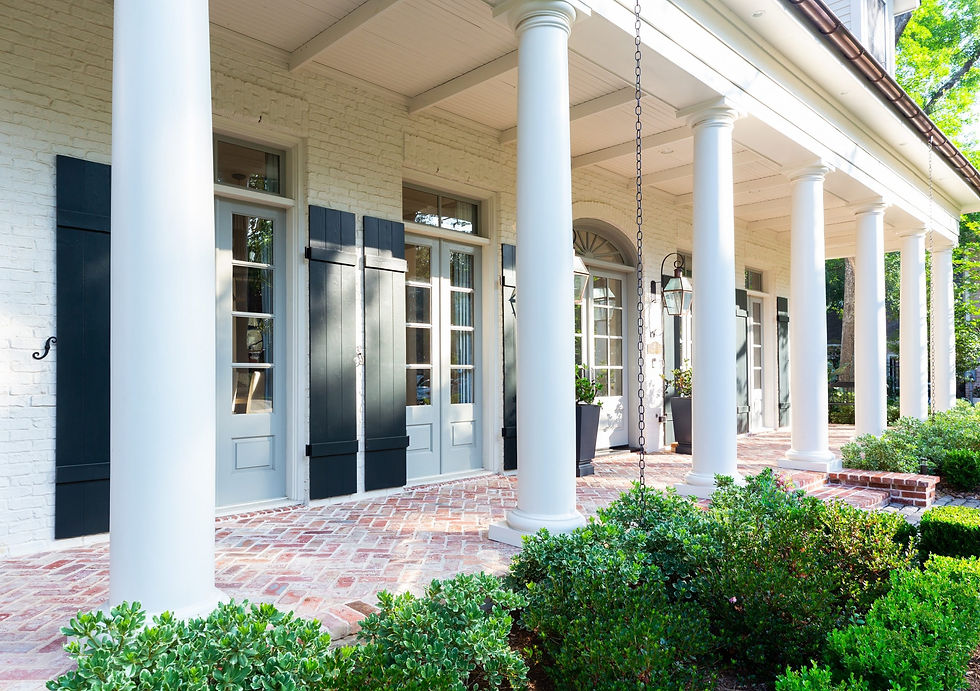
We love how slurries and smears offer such a wide spectrum of results! Used sparingly, it allows the unique character of your brick to show through. Or, you can really pile it on thick for a texture-rich look similar to paint.
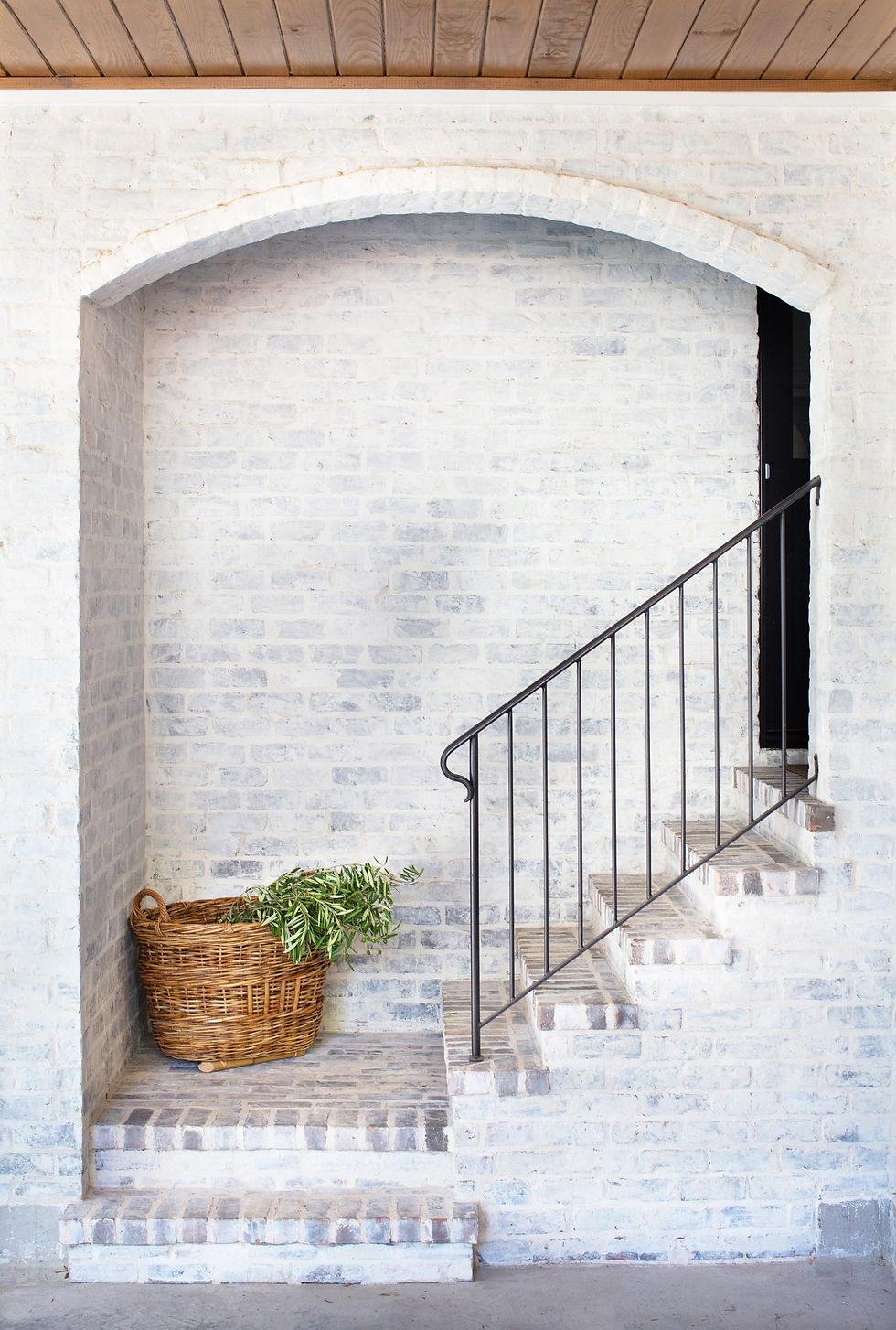
Expert Tip: Add texture and warmth to the whitewashed beauty through the use of warm woods, a handsome stair rail, or an oversized basket.
Paint: Painting the exterior of your home is an easy [and relatively cost-effective] way to refresh the look and feel of your property. Paint coats the entire brick leaving a smoother finish than mortar processes and appears after the construction of your home is complete. This means installing a less expensive brick because everything will be under paint in the end anyway! If you’re going with the paint option, it’s worth keeping in mind that many experts suggest a touch up or repaint every 5 years, especially if you reside in a harsh climate or near a body of water.
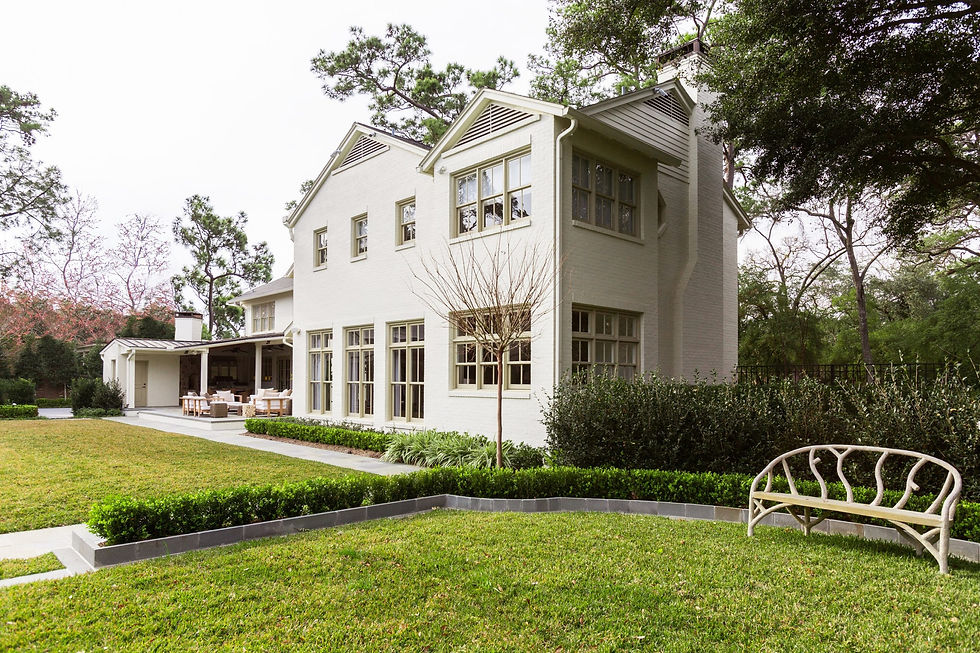
Expert Tip: If you know you’re painting and you decide on a less expensive brick, ask your supplier to have it tumbled for an added dose of vintage-inspired texture!

Comments